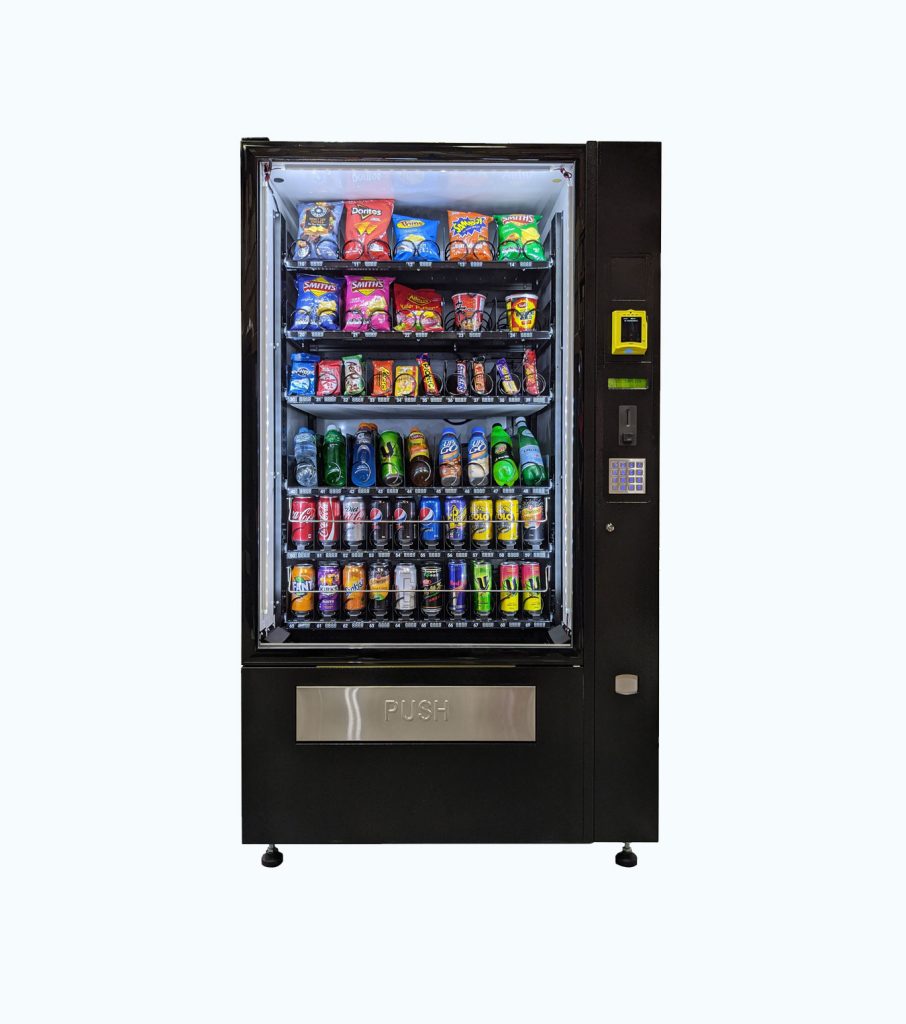
Vending machine maintenance is the routine work that keeps a machine vending, refrigerating and taking payment reliably: cleaning, mechanical checks, payment testing, refrigeration servicing and restocking. A repair is different — it is corrective work after a fault, such as a failed compressor, a jammed spiral or a dead card reader. Most machines need both: a predictable maintenance schedule, plus a repair path for when something breaks between visits.
1. How often should a vending machine be serviced?
Vending machine servicing means a scheduled visit that cleans, tests and restocks the machine. In Australia, a busy site with 100 or more transactions a week is usually serviced weekly or fortnightly, a quiet office machine monthly, and every machine should get a deeper preventative service each quarter. Refrigerated drink and fresh-food machines need the shortest intervals because condenser coils, door seals and drip trays affect food safety as well as reliability. Coffee machines are the most demanding of all: brew groups, grinders and milk lines need attention weekly at minimum.
2. What does a maintenance visit actually include?
A standard visit covers cleaning of the selection tray, glass, keypad and cabinet; sanitising of any product contact surfaces; vacuuming the condenser and checking refrigeration temperature; testing every coin, note and card payment path with a live transaction; checking spirals, motors, elevator belts and drop sensors; verifying telemetry and firmware are reporting; and restocking with date-checked product. The technician leaves a service record listing what was checked, what was replaced and any fault likely to recur.
3. What do I do if the machine jams or eats someone's money?
Report the fault using the phone number and machine ID on the front of the cabinet. For a cash loss, the operator refunds the customer directly, usually the same or next business day. For a card payment, the transaction is normally voided automatically because a completed vend never registered, so nothing is captured. Do not open a jammed machine yourself unless you own it and have isolated the power: spiral motors and glass fronts cause most site injuries.
4. Who pays for repairs — the site or the vending operator?
On a free placement or fully operated agreement, the vending operator owns the machine and pays for all servicing, repairs and parts. The site provides power and access, nothing else. On a machine you have bought outright, you pay for maintenance, either per callout or on a service plan. On hire or lease agreements, check the contract: most include mechanical repairs but exclude damage, vandalism and consumables such as filters.
5. How much does vending machine maintenance cost in Australia?
A standard callout is typically $150 to $250 plus GST for the first hour in a metro area, with parts charged separately. Preventative maintenance plans usually run $60 to $150 plus GST per machine per quarter, depending on machine type and location. Regional callouts carry a travel component. Coffee and fresh-food machines cost more to maintain than snack machines because of water, milk and refrigeration systems. Operated (free placement) machines cost the site nothing.
6. Do you service my area?
We coordinate technicians across every Australian capital and most regional centres, including Sydney, Melbourne, Brisbane, Perth, Adelaide, Canberra, Hobart, Darwin, the Gold Coast, Newcastle, Wollongong, Geelong and the Sunshine Coast. Response times are shortest in metro areas; regional sites are generally attended within two to five business days, or sooner where a local technician is already scheduled nearby.
7. Can older or discontinued machines still be repaired?
Usually yes. Common brands in Australia — Crane, Necta, Bianchi, FAS, Jofemar, Fuji Electric, Wittern, Seaga and Coca-Cola cabinets — have good aftermarket parts support, and boards, motors, keypads and refrigeration decks can often be replaced individually. The practical limit is the control board: once a board is unavailable and a used replacement cannot be sourced, replacing the machine is cheaper than repairing it. We can quote both paths so you can compare.
8. What if the card reader stops working?
Cashless readers such as Nayax, GBA and similar units fail most often because of connectivity, not hardware. Start by checking the reader shows a signal and the machine's MDB cable is seated. A reader that is offline still logs attempted taps, so the telemetry portal will usually show the exact drop-out time. If a firmware update or SIM re-registration does not restore it, the reader is swapped — a fifteen-minute job that does not require removing the machine.
9. Is cleaning and hygiene included?
Yes. Every service visit includes cleaning of touch surfaces, the delivery bin and the glass, plus sanitising of product contact areas. Refrigerated and fresh-food machines are also checked against food safety requirements: temperature logging, seal condition, drip tray drainage and stock date rotation. Sites in healthcare, aged care and food manufacturing can request additional documented cleaning records for their own audits.
10. What is the emergency breakdown response time?
Metro emergencies — a machine that is dead, leaking or holding refrigerated stock at risk — are targeted for same-day or next-business-day attendance. Standard non-urgent faults average 48 business hours. Regional sites are two to five business days. If a refrigerated machine fails, stock is removed or relocated first so product loss is contained while the repair is scheduled.
Typical maintenance intervals by machine type
| Machine type | Routine visit | Deep service |
|---|
| Snack (spiral) | Fortnightly to monthly | Every 6 months |
| Cold drink (refrigerated) | Weekly to fortnightly | Quarterly |
| Combo snack + drink | Weekly to fortnightly | Quarterly |
| Coffee / hot beverage | Weekly | Quarterly |
| Fresh food / healthy | Twice weekly | Quarterly |
| Micro-market | Weekly | Quarterly |
Vending machine servicing in regional Australia
Regional servicing means maintenance and repairs carried out outside the capital cities — in towns and regional centres where a dedicated vending technician is not based permanently. It works differently from metro servicing, and understanding the difference helps you plan realistic response times and costs.
How regional service runs work
In regional areas, technicians run scheduled service loops rather than individual ad-hoc visits. A technician based in a regional hub — for example Newcastle, Geelong, Wollongong, Townsville or Toowoomba — covers the surrounding towns on a rotating run. Routine maintenance is planned into these loops, which is why regional preventative plans are usually cheaper per visit than one-off callouts.
Regional response times
Metro breakdowns are targeted for same-day or next-business-day attendance. Regional sites are generally attended within two to five business days, and sooner when a scheduled run is already passing through your area. If a refrigerated machine fails in a regional town, stock is removed or relocated first so product loss is contained while the visit is scheduled.
What regional sites can do between visits
A site manager can safely handle the basics between technician visits: wiping touch surfaces and glass, keeping the condenser grille free of dust, checking the power outlet after an outage, and reporting the machine ID and fault code shown on the display. Modern cashless readers report faults remotely, so many regional issues — offline readers, pricing errors, jam logs — are diagnosed before anyone arrives.
Areas we cover
We coordinate technicians across every capital city and most regional centres, including Newcastle, Wollongong, the Central Coast, Geelong, Ballarat, Bendigo, the Gold Coast, the Sunshine Coast, Townsville, Cairns, Toowoomba, Launceston and Alice Springs. For remote and outback sites we quote travel upfront so there are no surprise charges. See the full list on our service areas page.
Where to go next
- Repairs & service — our nationwide technician network, callouts and preventative maintenance plans.
- Book a repair or service — send the machine details and fault and we will arrange a technician.
- Vending machine spare parts — boards, motors, keypads, locks, coolers and payment hardware.
- Request a spare part — tell us the brand and model and we will source it.
- Card readers & cashless payments — reader options, connectivity and upgrades.
- Vending machine ownership guide — costs, earnings and running a machine end to end.
Need a machine looked at?
Call 0412 025 552 or send the details — we reply within 8 business hours.
Request a service or repair