
November – February
Peak demand. Water and no-sugar lines dominate, restock frequency should step up, and refrigeration faults cost the most because the machine is working hardest exactly when people need it.
Seasonal hydration
Worked examples showing how a cold drink machine is specified for a site — the machine, the footprint, the power draw, the product mix and what changes between an office, a shed and an open depot.
Read this first
Every scenario below is built from the way sites of that type are genuinely set up and serviced in Australia — machine specifications, footprints, power draw, product weighting and service intervals are real. They are not named customers and they do not carry invented figures, quotes or results. Where a number is given it is a typical range, not a promise about your site. If you want your own site assessed with real numbers, send it through and a person will look at it within 8 business hours.
Worked example
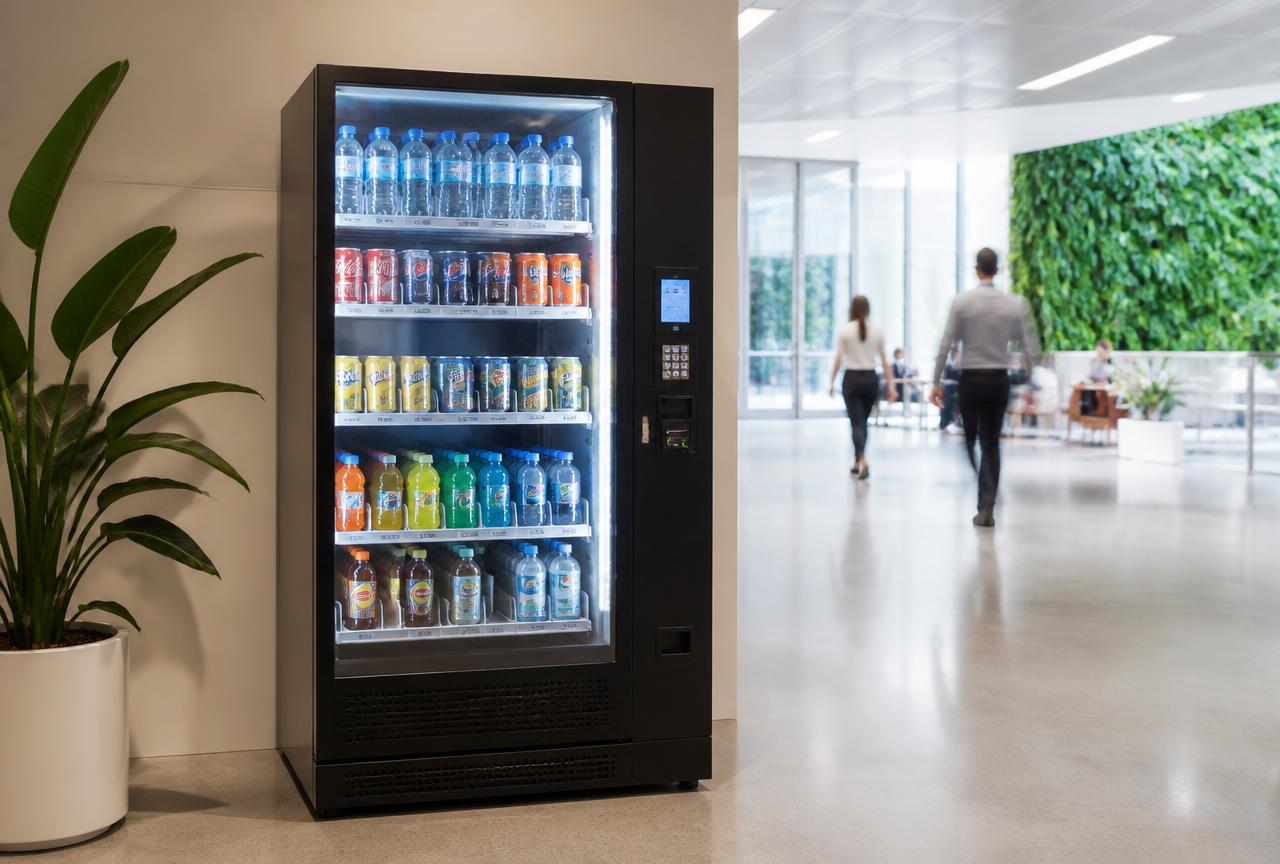
Professional services floor, about 120 staff, air-conditioned, no ground-floor retail after 5pm
Through December to February the afternoon café run turns into a fifteen-minute round trip in the heat, and the kitchen tap water is warm by the time it reaches the desk. Staff either go without or leave the floor. The facilities team wants cold drinks on the floor without a kitchen refit, a fridge to restock, or a line item in the budget.
The hydration problem becomes an amenity rather than a project: no capital cost, no staff time restocking, and the floor keeps its people at their desks through the hottest part of the afternoon. On a free placement the site's only cost is the power point.
Worked example
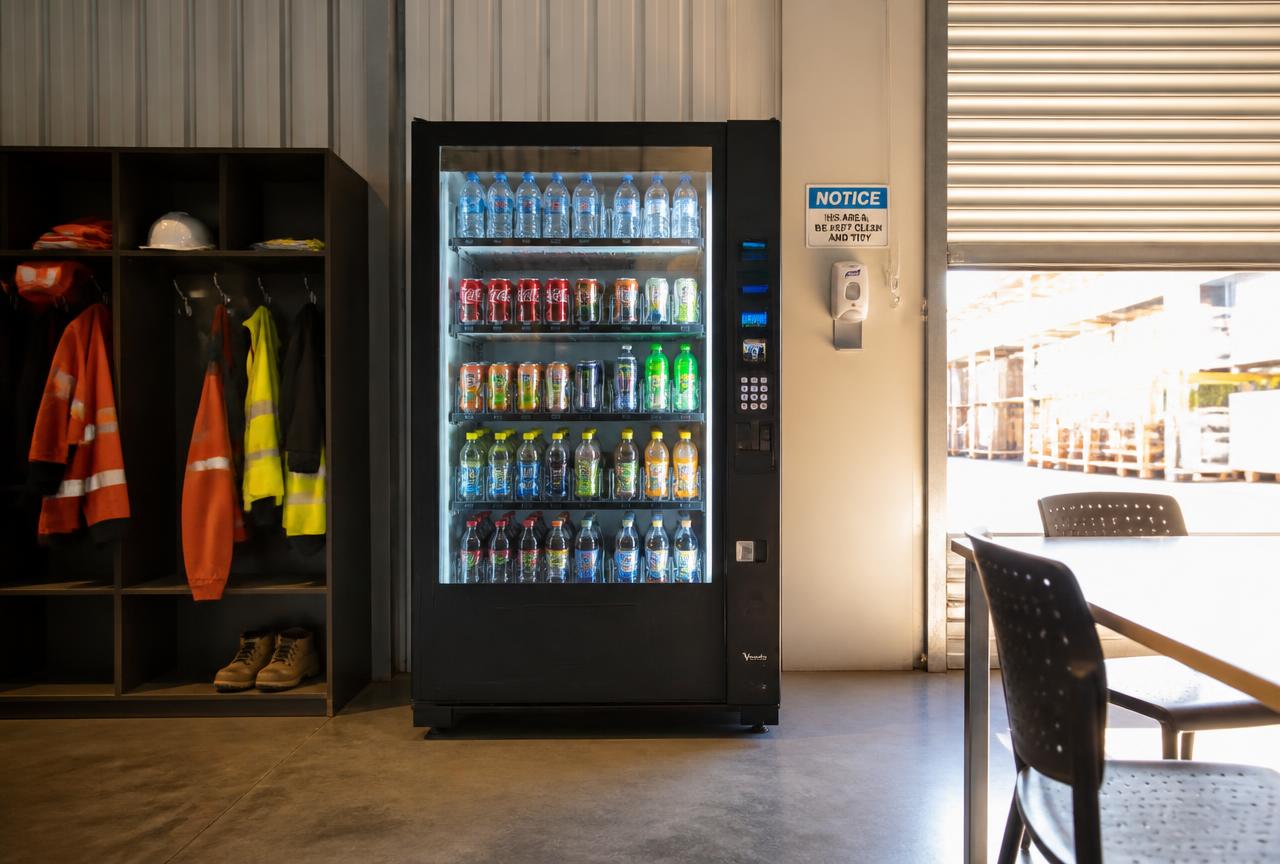
Distribution centre, about 60 pickers and drivers across two shifts, non-air-conditioned shed
Shed temperatures run well above outside air on a 38-degree day. Crews are drinking hard, the site fridge is emptied by first break, and someone has to keep buying and carting cartons of water. Safety wants reliable cold water available on every shift, including the 5am start and the evening pack-out.
Cold water is available at every break on every shift without anyone on site buying, carting or restocking it, and the crib-room fridge goes back to being for lunches. The machine is specified for heat rather than being an office unit put in a shed, which is the single most common reason drink machines fail in industrial sites.
Worked example
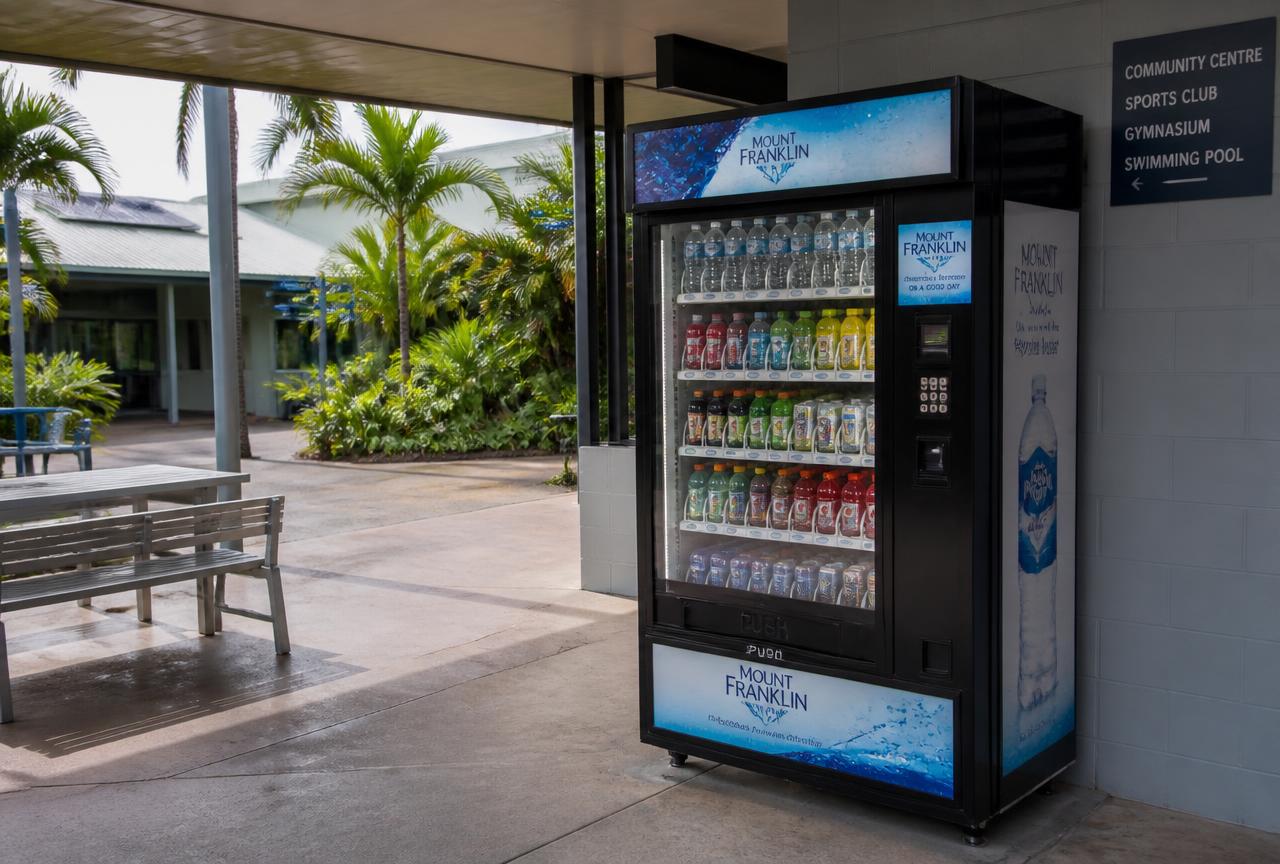
Council-style depot and community centre, roughly 45 staff plus visiting contractors and the public
The crib area is a covered slab open on two sides. Humidity, dust and wind-driven rain reach the space, and a standard indoor machine placed there would sweat, corrode and trip. Demand is real though: outdoor crews, visiting contractors and weekend sport all want cold drinks, and the nearest shop is a drive away.
A site that most operators decline becomes workable, because the cabinet matches the conditions. The facility gets a drink supply for staff and visitors at no capital cost, and the equipment is not being slowly destroyed by the weather.
Through the year
Peak demand. Water and no-sugar lines dominate, restock frequency should step up, and refrigeration faults cost the most because the machine is working hardest exactly when people need it.
Demand tapers but stays high in northern Australia. Good window for condenser cleaning and planogram changes before the cooler months.
Cold drink sales drop in the southern states while hot drinks and snacks lift. Machines in Queensland, the Northern Territory and northern WA barely change.
The window to get a machine placed before summer. Install lead times stretch once the first heatwave hits and everyone calls at once.
Next step