
Published 26/10/2026 · 7 min read
Navigating the Australian Second-Hand Vending Market
Buying a used vending machine is one of the most cost-effective ways to establish or scale an unattended retail business in Australia. A quality pre-owned machine can deliver the same daily revenue as a brand-new factory unit, but at 40 to 60 percent lower capital outlay. This reduced initial commitment shortens the break-even timeline on new site placements.
However, the second-hand market carries technical and commercial risks. An older machine that appears functional in a seller's garage may conceal a failing refrigeration unit, unsupported mainboard firmware, or an outdated wiring harness that rejects modern tap-and-go card readers. In Australia, where cashless payment rates exceed 85 percent of all vending transactions, an un-upgradable machine quickly becomes a financial liability. Knowing what to evaluate mechanically, electrically, and commercially ensures that your used investment generates passive revenue rather than ongoing service callout bills.
Refurbished versus Cleaned and Tested: Understanding the Difference
Commercial listings often blur the line between a genuinely refurbished vending machine and a unit that has merely been cleaned and turned on. Understanding this distinction determines whether a machine will run reliably for five years or fail within five weeks.
A surface-level "cleaned and tested" unit typically receives a cosmetic wipe-down, replacement of blown fluro tubes with LEDs, and a basic test run where a single can or snack drops correctly. The seller verifies that the machine powers up and the compressor turns on, then advertises it as work-ready. Existing components that are near the end of their operational lifecycle remain untouched.
By contrast, a professional refurbishment process involves comprehensive preventative renewal:
- Stripping and rebuilding product delivery mechanisms, replacing fatigued motor gears, microswitches, and broken spiral coils.
- Servicing the refrigeration deck, which includes chemically flushing the condenser coils, clearing drainage paths, checking running pressures, and replacing noisy evaporator fan motors.
- Updating internal wiring harnesses to support standard Multi-Drop Bus (MDB) configurations.
- Flashing logic board microcode to the newest stable firmware version to ensure communication compatibility with telemetry systems.
- Fitting new door seals to maintain internal temperatures, prevent ambient air infiltration, and protect the refrigeration cycle from short-cycling.
- Electrical safety testing and tagging in compliance with Australian standard AS/NZS 3760.
The Technical Inspection Checklist
Before completing the purchase of any pre-owned vending machine, conduct a methodical physical and operational assessment.
1. Refrigeration Deck Performance and Gas Type
In Australia's climate, a refrigeration system must handle ambient summer temperatures exceeding 35 degrees Celsius, especially when placed in manufacturing plants, mining facilities, or outdoor covered spaces. Inspect the compressor compliance plate. Modern machines typically run on R134a or newer hydrocarbons such as R290. Avoid machines charged with obsolete refrigerants like R12 or R22, as licensed Australian refrigeration mechanics cannot legally recharge or service systems with phased-out ozone-depleting gases.
Power the machine up and monitor temperature drawdown. A healthy beverage machine should drop internal cabinet temperatures from ambient (22 degrees Celsius) down to around 3 to 4 degrees Celsius within 60 to 90 minutes. Listen closely to the compressor cycling. Knocking, rattling, or continuous operation without cutting out indicates internal mechanical fatigue or loss of refrigerant pressure.
2. Cabinet Integrity and Thermal Insulation
Inspect the main cabinet, outer panels, and base frame for structural rust. Surface rust on exterior sheet metal can be sanded and repainted, but rust around the refrigeration bay floor, cabinet corners, or evaporator drip tray undermines structural integrity. Check the magnetic door gaskets. Damaged, brittle, or misaligned seals allow moist air into the cabinet, creating heavy ice buildup on the evaporator coils that chokes airflow and burns out the compressor.
3. Dispense Mechanisms and Motor Assemblies
Test every motor on every tray. In snack machines, insert test products into the spirals and trigger dispenses across all selections. Motors must rotate smoothly through a full 360-degree rotation and stop precisely at the home index position. Jittery rotation, continuous running, or failed indexing points to broken nylon drive gears or worn microswitches. For drink machines, check that drop-down cradles or serpentine delivery gates release single cans or bottles cleanly without multi-vending or jamming.
4. Drop Sensor Hardware
Modern vending machines rely on optical drop sensor arrays (such as guaranteed delivery systems) across the bottom delivery bin. If an item fails to drop, the sensor detects the absence of product impact, commands the spiral to pulse again, or prompts the customer to make an alternative selection rather than keeping their money. Ensure these optical infrared beams are present, clean, and calibrated through the board's service menu.
MDB Protocol and Cashless Payment Retrofitting
Cash is no longer king in the Australian vending sector. The vast majority of consumers tap their physical debit card, smartphone, or smartwatch to pay. If a used machine cannot run a cashless telemetry reader such as a Nayax VPOS Touch or Cantaloupe system, its earning potential is cut by more than half.
Cashless retrofitting requires the machine's control board to communicate via the Multi-Drop Bus (MDB) protocol. Older machines from the 1990s and early 2000s often operate on obsolete serial interfaces, Micromech, or early Executive protocols.
Check the internal main controller board (VMC). Look for a distinct six-pin MDB harness connector running between the board, the coin validator, and the bill reader. Ensure the board firmware supports MDB Level 2 or Level 3. If a machine operates strictly on an older legacy protocol, you must budget for an aftermarket MDB conversion kit or a complete logic board swap, which can add $500 to $1,200 AUD to your setup costs.
Realistic Price Bands in Australia
Second-hand vending prices vary based on machine type, age, internal capacity, cosmetic state, and payment system inclusions. Indicative pricing across the Australian market typically falls within the following brackets (excluding GST):
Entry-Level Used Units ($1,200 to $2,500 AUD)
Machines in this band are generally older (10 to 20 years), sourced from private sellers, liquidation auctions, or operators retiring older fleets. They usually require cosmetic clean-up, may lack MDB support out of the box, and do not include card readers or warranties. Often configured for cold drinks (cans only) or snacks.
Mid-Tier Refurbished Machines ($3,000 to $5,500 AUD)
This category represents the most practical tier for new operators. Machines are usually 5 to 10 years old, sourced from established suppliers, and feature MDB support, guaranteed drop sensors, refreshed LED lighting, and serviced refrigeration units. Many include a 30- to 90-day parts warranty. Combination (drink and snack) machines in this tier are versatile workhorses for typical medium-density site locations.
Late-Model Commercial Units ($6,000 to $8,500 AUD)
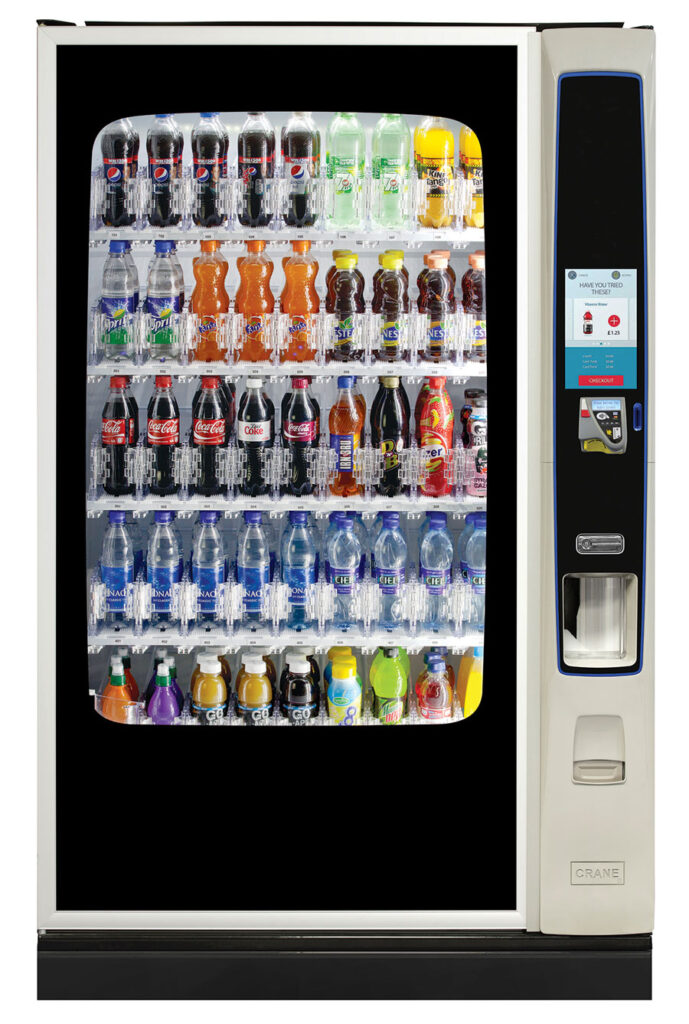
Units in this range are typically late-model (2 to 5 years old) glass-front combination machines or heavy-capacity beverage vendors from brands like Crane, AMS, US-Vending, or high-grade European manufacturers like Necta. They arrive with factory touchscreens or digital displays, variable internal climate zones, hydrocarbon refrigeration, and pre-fitted cashless payment gateways.
Private Sale Pitfalls
Platforms like Gumtree and Facebook Marketplace host hundreds of used vending machines, but purchasing from unverified private sellers presents distinct operational traps:
- **Unregistered Encumbrances:** A machine offered cheaply by a private party may be leased equipment or owned by a national vending franchise under finance. Always verify ownership or run a Personal Property Securities Register (PPSR) check against the business or serial number.
- **Proprietary Software Locks:** Certain machines manufactured for global beverage companies or large route operators carry proprietary locked firmware. Without specialist master codes or factory reset chips, third-party operators cannot alter pricing, change configurations, or access the service menu.
- **No After-Sales Support:** When an un-refurbished board or compressor fails 48 hours after collection, private sellers offer no recourse. A machine needing a replacement control board ($600 AUD) and a re-gassed refrigeration unit ($900 AUD) quickly costs more than a professionally refurbished model.
Transport, Tail-Lift Freight, and Site Delivery
Commercial vending machines weigh between 250 kilograms for a small glass-front snack unit and upwards of 450 kilograms for a fully loaded cold drink vendor. Transporting these assets across Australia requires specialist logistics.
Never attempt to lay a refrigerated vending machine flat on its side in an open trailer or ute tray. Laying a machine flat causes compressor oil to migrate into the refrigeration lines. If the unit is subsequently powered on before the oil settles back into the sump, the compressor will suffer fatal hydraulic lock and burn out. If a machine must be tilted for transport, it must stand upright for at least 24 hours before plugging it into mains power.
Budget between $250 and $600 AUD for metropolitan tail-lift transport with heavy-duty pallet jacks, and upwards of $800 to $1,500 AUD for interstate depot-to-door freight. Ensure delivery pathways at the placement venue have flat thresholds, commercial elevator clearances, and doorways measuring at least 850mm to 1000mm wide.
Frequently asked questions
How much does a used commercial vending machine cost in Australia?
A basic, older used vending machine typically costs between $1,200 and $2,500 AUD from private sellers. Professionally refurbished combination or drink machines generally range from $3,000 to $5,500 AUD ex GST. Late-model, high-capacity machines with modern card readers and drop sensors sit between $6,000 and $8,500 AUD.
Can any used vending machine be fitted with a cashless card reader?
No, not every machine can accept a card reader. The machine's control board must support the Multi-Drop Bus (MDB) protocol, typically at Level 2 or Level 3 firmware. Machines manufactured prior to the early 2000s running on older pulse or serial protocols require expensive aftermarket converter boards, and some cannot be retrofitted at all.
What are the main risks of buying a vending machine on Facebook Marketplace or Gumtree?
The primary risks are proprietary firmware locks that block configuration changes, unserviced refrigeration decks running obsolete R12 or R22 gas, missing MDB interfaces, structural rust, and lack of warranty. Additionally, machines may still be under financial lease or encumbrance by commercial operators without a clear title.
What warranty should come with a refurbished vending machine?
Reputable commercial vending suppliers in Australia typically provide a 30- to 90-day warranty on major components, covering the logic board, refrigeration compressor, and motor arrays. Private sales offer no warranty. Always clarify whether a warranty covers replacement parts only or includes on-site technician labour.
Want a machine at your site?
Free placement for eligible sites, or new and refurbished machines to buy, lease or finance. We reply within 8 business hours.
Make an enquiry